2026 Engineering for Women’s Health Symposium: Collaboration to Accelerate Solutions

At the start of the 2026 Engineering for Women’s Health (ENG4WH) Symposium on March 20, Professor and Chair of the Department of Biomedical Engineering Shelly Peyton reminded the audience that it was only in 1993 that women and minorities were legally mandated to be included in clinical trials.
“Despite making up 50% of the population, there is a lot we don’t know about women’s health, and only crumbs of research are dedicated to studying it,” Peyton said. “Endometriosis, for example, affects 10% of women, but accounts for about 0.04% of the NIH budget.”
This year’s ENG4WH symposium was hosted at Tufts University by the Department of Biomedical Engineering, with leadership from Assistant Professor Juan Gnecco and graduate students Gianna Scibilio and Reagan Bushok from the Laboratory of Reproductive Engineering.
The event brought together 175 attendees from 26 different universities and 15 companies–an increase of 40% compared to last year’s symposium. This representation from different companies and universities helped to facilitate interdisciplinary collaboration that is necessary to address the many uncertainties surrounding women’s health issues.
In his opening remarks, Gnecco emphasized the importance of bridging the gap between engineering, biologists, and computer scientists. Incorporating various types of expertise into research can lead to addressing challenges with new ideas and perspectives. For example, 3D models of specific tissues or cells can help scientists understand women’s health issues in greater detail and with improved accuracy, especially for diseases for which animal models do not mimic the anatomy and pathophysiology of these diseases.
Dr. Diana Bianchi, founding executive director of Tufts Medical Center’s Mother Infant Research Institute and professor at Tufts School of Medicine, and former Former Director of the National Institute of Child Health and Human Development (NICHD), delivered a keynote address that exemplified how engineering and computational biology can lead to translational successes in women’s health.
In her talk, Bianchi discussed a study she led investigating the health of women with non-reportable results from cell-free DNA tests during pregnancy. Bianchi discovered that the noninvasive test, meant to provide insight on infant health, can actually help diagnose hard-to-detect cancer in the women tested. Her work helped dozens of women treat early-stage cancer, saved lives, and changed the way these test results are reported and communicated.
“These tests may be able to detect early onset cancer in anyone in a few years' time,” said Bianchi.
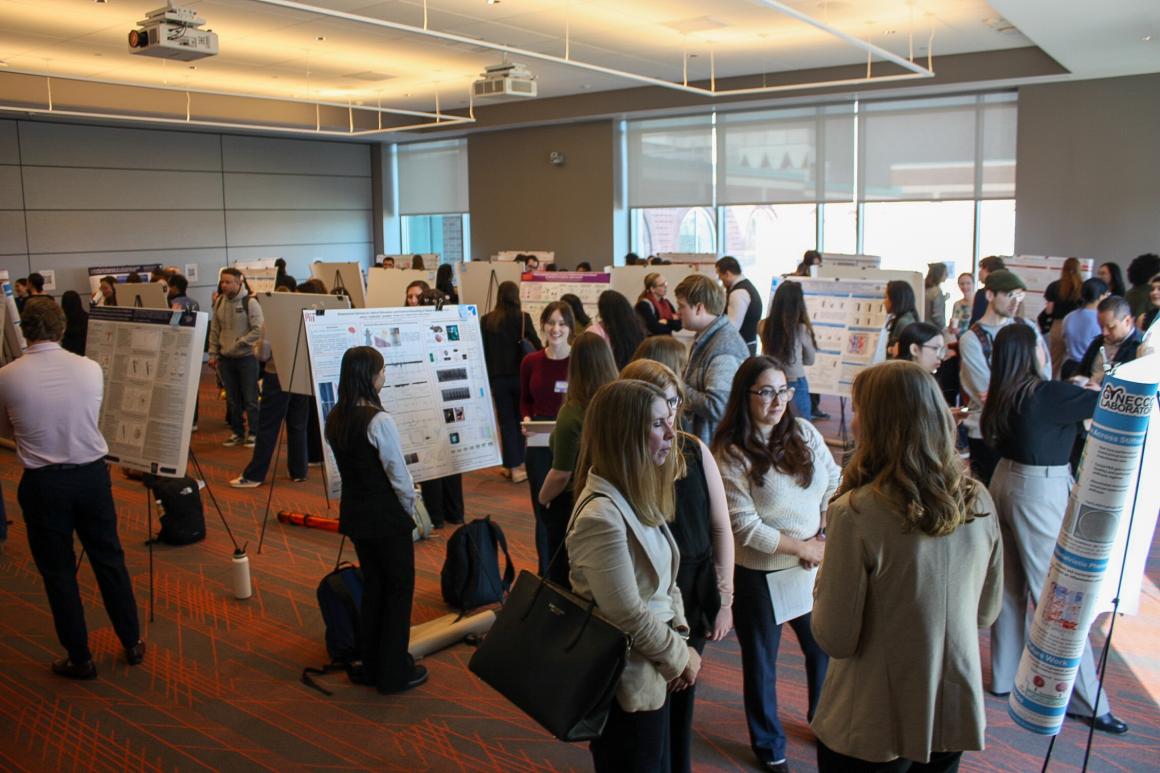
The event featured sessions discussing mechanisms and diseases of the female reproductive tract, fetal-maternal health across the reproductive lifespan, and innovations in diagnostics and therapies for women’s health. Among the Tufts faculty who participated, Professor Sameer Sonkusale delivered a talk on point-of-care technologies for women’s health. Attendees also presented posters with topics ranging from novel drug delivery approaches designed to target reproductive diseases, to innovations in medical devices aiming to solve diagnostic and medical procedures in gynecology and obstetrics.
“Connections and collaborations are an extremely valuable tool when it comes to science, but especially in the field of women’s health that has decades of catching up to do,” said Gnecco. “The more we can collaborate, the further we can accelerate discovery and solutions for women’s health issues that have been understudied for far too long.”
Department:
Biomedical Engineering