Integrating Science and Community Needs to Better Plan for Floods
When Central Texas was hit by a major storm in July 2025, 135 people died. Twenty inches of rain fell within hours, and the Guadalupe River rose 26 feet in 45 minutes. Despite sound meteorology, warnings, and data, there were no evacuation plans or sirens, and rescue helicopters were delayed. Scientific facts and required interventions did not converge—a common problem during natural disasters like floods and wildfires rooted in one nuanced issue: failure for collective action.
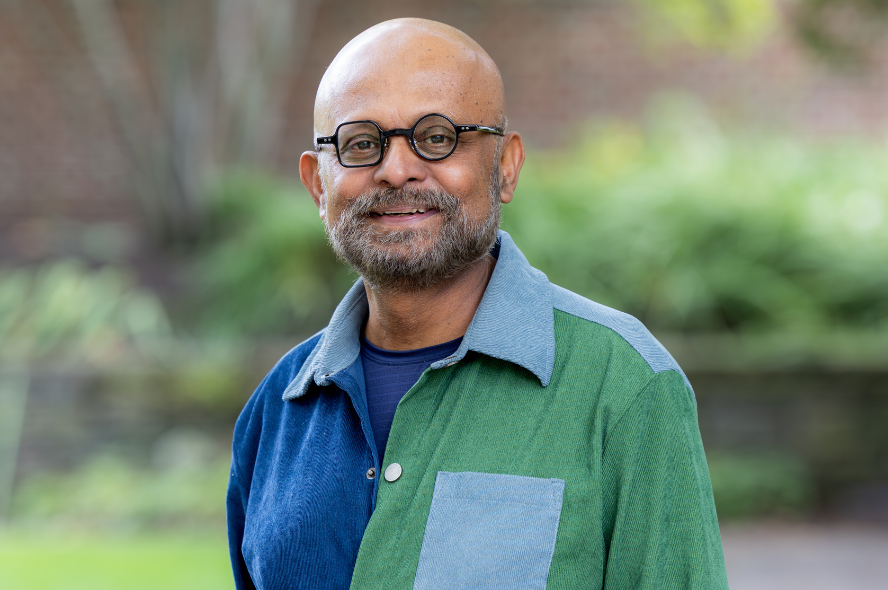
Professor Shafiqul Islam argues that science alone is not enough to properly address these types of local environmental disasters; science must consider the social and political landscape in which the challenge occurs to develop useful, sustainable solutions to complex issues like flooding. To demonstrate the relationship between science, politics, and social narratives, Islam recently led a study focusing on a severe 2024 Bangladesh flood, showcasing that flood preparedness can be achieved by developing plans that consider both the scientific and social landscapes to shape collective action response.
This research, a joint collaboration between Tufts and Northeastern University, was recently published in the journal Water Resources Research. The Tufts team included Ph.D. student Kevin Smith and alumnus Nick Rabb, EG22, EG24.
Analyzing the factors that shape flood response and damage
Climate data and forecasts do not exist in a vacuum—they coexist with social identities, ideas, lived experiences, and values that all affect how scientific facts are interpreted. Previous research shows that flood damage is not only determined by exposure to risks or the intensity of an event, but also by this interplay between environmental and social systems. As the digital age continues to change how hazard information spreads and enhances misinformation, studying the relationship between social narratives and science can develop more effective flood response and planning.
The Bangladesh flood of 2024 occurred in a region of southeastern Bangladesh that had not experienced major flooding in recent years, but the 2024 event was consistent with observed monsoon rainfall and atmospheric dynamics. Despite this scientifically credible information about how the flood occurred, primarily a narrative that India released water from a dam to intentionally flood the area spread online.
“The flood was extreme,” Islam explained. “But, scientifically speaking, it wasn’t unusual or unexpected. That’s where people’s perceptions come into play.”
Islam and his collaborators analyzed the flood from two angles: the hydrological factors that led to the flooding and the social narratives that emerged as the flood unfolded. Using water flow and precipitation data, the team confirmed that the event was primarily driven by natural precipitation rather than altered dam operations.
To better understand narratives perpetuated on social media, the researchers analyzed various posts on Facebook and X (two popular news sources for Bangladeshis) by searching for trending hashtags. They identified overarching themes in these posts, some of which contained accurate information, and many of which contained misinformation largely shaped by historical mistrust—a vulnerability heightened by the flooding crisis and the rapid spread of information online.
Coupling science and societal needs with action
"Engineering alone is not enough to solve these kinds of issues,” Islam said. “We must figure out what will actually be useful to the community. We need to study the floods, but we also need to know how to act for desirable outcomes.”
The researchers suggested creating flood early warning systems that provide actionable and timely information about potential flooding. However, as 70% of flood-affected households across Bangladesh do not receive warnings of floods, the team suggested that for this system to be effective it must reach the correct people while also ensuring that the messengers of this information are trusted.
“A technically sound forecast has no value if those it’s meant to protect don’t receive it, understand it, or trust its source,” Islam said.
The social factors that shape how people perceive information are place-specific, but the methodology and conclusions of this research are widely applicable to other areas across the world. Whether addressing extreme climate events or other environmental issues such as water and food access, employing solutions equally grounded in science and real community needs can help create effective, sustained interventions that can better protect both people and the environment.
Learn more about Islam’s research and his pioneering work in Engineering Diplomacy—a transdisciplinary approach to solving complex societal problems that brings together systems thinking, complexity science, and principled pragmatism to bridge disciplinary and institutional divides.
Department:
Civil and Environmental Engineering