Protecting Public Safety by Improving Post-Wildfire Remediation and Rebuilding
When wildfires strike, cities and states respond quickly to evacuate cities and reduce fire spread, but what happens after the last flame goes out? Affected residents are left confused about how to make their home safe again, and there’s often uncertainty about where sampling is needed and what should be tested.
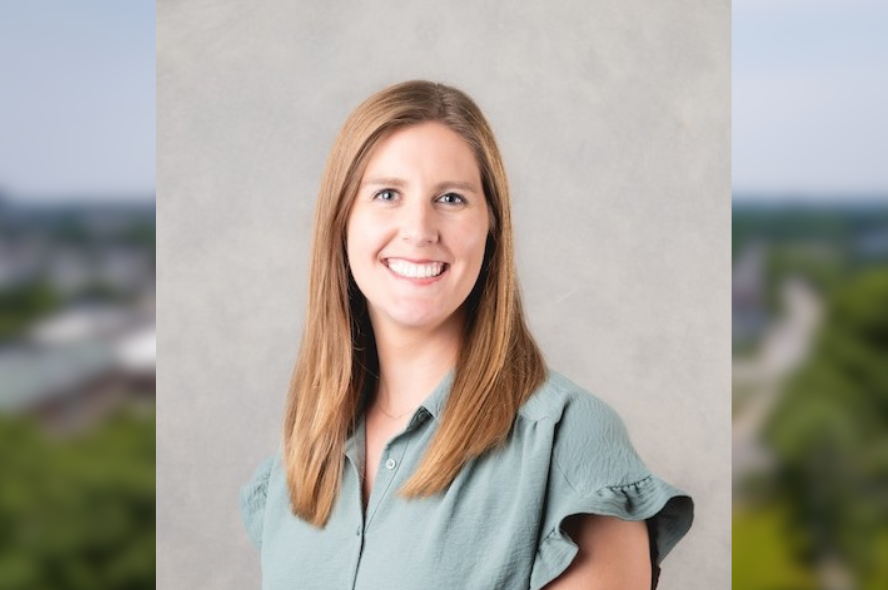
Lauryn Spearing, assistant professor in the Department of Civil and Environmental Engineering, has received a National Science Foundation (NSF) grant to study how to improve post-fire property sampling and testing and increase the accessibility of results to meet community needs. With a focus on the California Palisades and Eaton fires of January 2025, Spearing and her collaborators will investigate challenges faced by community members to understand contamination and, in turn, help remediate and rebuild.
Her team includes John A. and Dorothy M. Adams Faculty Development Assistant Professor Deborah Sunter of the Department of Civil and Environmental Engineering, Associate Director of Civic Studies Samantha Fried at Tisch College, Andrew Whelton from Purdue University, and Sanjay Mohanty from UCLA.
Following the fire
When wildfires damage or affect a building, hazards can exist long after the last flame goes out. Even if a home appears aesthetically fine, toxins can persist in vents, doorways, and even furniture, leading to, for instance, a windowsill that has an unhealthy amount of lead, or air that contains carcinogens.
Following a wildfire, affected residents typically hire consultants to do indoor testing. But recommendations and results can be confusing and inconsistent, leaving people unsure how to make their home safe.
In previous research, Spearing interviewed community members affected by the East Palestine, Ohio train derailment, which was followed by a controlled burn that released hazardous materials near residential areas. “The biggest thing coming up was that they didn’t know if their house was safe, if their dog could go outside, or if they could drink their water,” Spearing said. “A lot of safety questions were unanswered.”
Tracking confusion and contamination
The research team will collaborate with stakeholders that respond to fires in California, Colorado, and Texas, to reduce uncertainty about post-wildfire contamination. The team will interview residents affected by the Palisades and Eaton fires to understand where their confusion originates and what information could make the recovery process easier. This information from residents will help the team identify how sampling and testing and communication of the results could be streamlined and improved.
Another piece of the project involves conducting experiments to better understand hazards to fire-damaged infrastructure. To test this, the research team will study how far and where pollutants are transported after a building catches fire. This research can help inform what tests must be conducted and where, along with hazards to be aware of after wildfires.
To simplify the disparate information that often comes from numerous home contamination reports, the research team will investigate how AI can be used as a tool to better understand hazards and actions to be taken for both residents and stakeholders.
Research that addresses community needs
Post-fire communication can be just as lifesaving as communication during a wildfire. With a better understanding of wildfire risks and how to communicate them, Spearing and her collaborators’ efforts could help to improve public safety as urban wildfires become more frequent and intense.
“The larger goal is to converge engineering and social systems,” said Spearing. “We can study the contamination of wildfires and how fire affects infrastructure all day long. But this information must actually reach those who are directly impacted for it to be useful.”
Department:
Civil and Environmental Engineering