Offshore Wind Turbines with a Side of...Coral?
Most ocean-related climate challenges are interconnected. For instance, as the ocean absorbs carbon dioxide, ocean acidity increases, dissolving the shells of important marine species and reducing available carbonate ions that are crucial building blocks for coral. This exacerbates an already severe loss of biodiversity in oceans from overfishing and pollution.
However, the positive side of these interconnected issues is that their solutions—even if intended to address only one problem—often help address multiple issues. But what if solutions were engineered that way from the start?
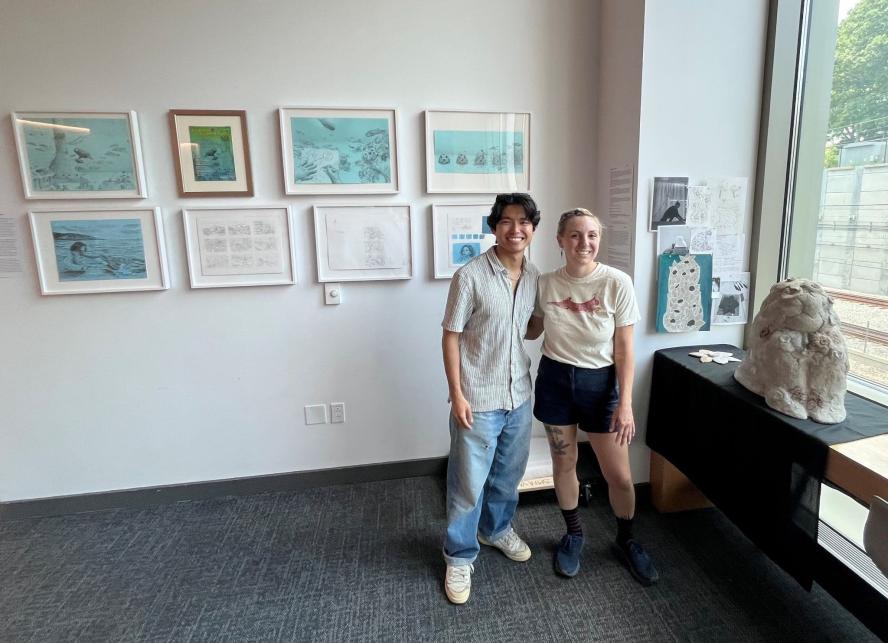
MOCEAN is a Tufts University-led, National Science Foundation-funded initiative that supports the advancement of science, engineering, policy, and partnerships for healthy oceans and the people who work with them. At a recent MOCEAN event at Tufts, engineers, marine biologists, and artists discussed their progress on a research project that aims to regenerate coral reefs on offshore wind structures.
One structure, two solutions
The MOCEAN artificial coral team is researching how to engineer offshore wind structures that simultaneously produce renewable energy and regenerate coral. With materials attached to the ocean floor, and the potential to generate more than 4,200 gigawatts of energy—about three times the amount of electricity annually consumed in the United States—offshore wind development could offer a convenient way to tackle two climate issues at once.
“The goal is to design these offshore wind turbines to last for seven generations—about 200 years,” said Eric Hines, Professor of the Practice and Kentaro Tsutsumi Faculty Fellow in the Department of Civil and Environmental Engineering. Hines is the director of the Tufts Offshore Wind program and works with Professor Dan Kuchma, who leads the MOCEAN Initiative, to facilitate collaboration between MOCEAN and other initiatives in and outside of Tufts. “Currently, the turbines are only designed for about 25-year periods. But with newer structures intended to be in the ocean for centuries, we really want to maximize their potential.”
The National Oceanic and Atmospheric Administration estimates that the world has lost 30-50% of its coral reefs. Artificial reefs could help to rebuild habitats for these species which are crucial for healthy, resilient ocean ecosystems.
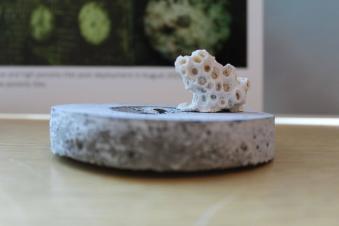
Rick Usami, a Ph.D. student in the Offshore Wind Energy program, is helping to research how to develop a nutrient-enhanced substance that can coat materials underwater and promote the growth of organisms that live near the bottom of the ocean, such as shellfish, kelp, and corals. Developed by the lab of Colleen Hansel, Senior Scientist at the Woods Hole Oceanographic Institution, the coating is enriched with micronutrients like manganese, zinc, and calcium carbonate, providing an ideal environment for larvae survival.
“When you’re sick, you take zinc or Vitamin C to help you feel better,” explained Loretta Roberson, Associate Scientist at the Marine Biological Laboratory in Woods Hole and collaborator on the nature-enhancing coating research. “This is similar: we’re hoping to create the type of environment where these organisms can reproduce and survive, while also helping them become more resilient to stress and temperature changes with the addition of critical nutrients.”
Inspiring appreciation for the ocean with art and stories

Ambitious engineering solutions often require outreach and communication to get policymakers, state and local governments, funders, and communities on board. That’s why Usami collaborated with Kat Wetherall, student at the School of the Museum of Fine Arts at Tufts (SMFA), and Cameron Barker, SMFA MFA’20, to develop a children’s book and series of artwork that help people understand the research team’s vision of merging offshore wind turbines with artificial coral.
“A big problem with addressing ocean issues—and adopting solutions—is that no one can see them,” explained Hines. “Think of Finding Nemo, or The Little Mermaid…These are the types of stories to really inspire appreciation for the ocean. We wanted our artwork to tell a story, to directly connect our ideas to human lives, while also showing people what offshore wind artificial reefs could look like.”
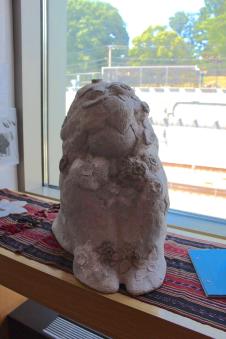
As climate change continues to threaten ocean health, the artificial coral research team is building a foundation that encourages engineers to dream of ambitious, nature-based solutions that maximize benefit to ocean and human life. The team’s communication about climate solutions through human-centered artwork and stories can help connect nontechnical audiences to these important ocean solutions and ecosystems. Learn more about MOCEAN.
Department:
Civil and Environmental Engineering