Faculty

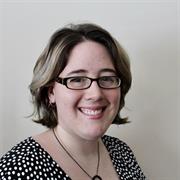
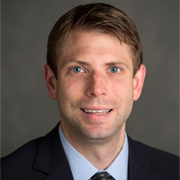
Person Placeholder

Arthur Shih

Part-time Lecturer
Chemical and Biological Engineering
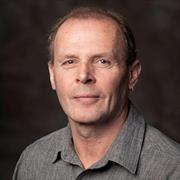
faculty photo

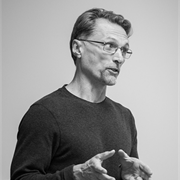
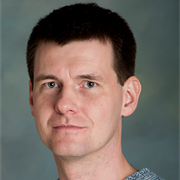
Roy Shilkrot

Part-time Lecturer
Computer Science
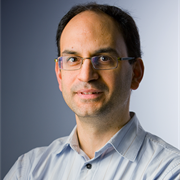
faculty photo

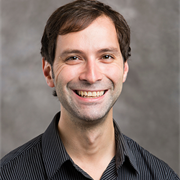
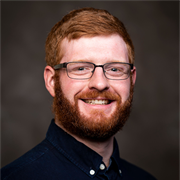
Elaine Short

Assistant Professor
Computer Science
human-robot interaction, accessibility, robotics, human-in-the-loop machine learning, assistive technology Applying human-centered design and disability community values to the development, deployment, and evaluation of AI and machine learning for robotics, including: human-centered human-in-the-loop machine learning; disability-friendly assistive robotics; autonomous HRI in groups, public spaces, and other human-human contexts; and accessibility and disability inclusion in robotics education and the computing research community.
faculty photo

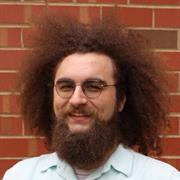
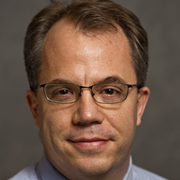
Paul Simmonds

Associate Professor
Electrical and Computer Engineering
Experimental development of novel semiconductor nanostructures for quantum information sciences. Tailoring crystal symmetry and strain at the nanoscale to produce next generation optoelectronic devices. AREAS OF RESEARCH EXPERTISE • MBE growth, chamber maintenance, and system support. • Low-temperature, high-field magnetoresistance quantized carrier/spin transport (quantum Hall effects, Shubnikov-de Haas oscillations, 1D quantized conductance, 0.7 structure, etc.). • Atomic force microscopy (AFM), transmission electron microscopy (TEM), X-ray diffraction (XRD) and photoluminescence (PL), Raman spectroscopy, ellipsometry, Rutherford back scattering, etc. • Cleanroom-based micro/nanofabrication including photo- and e-beam-lithography, metallization, and device packaging
faculty photo

Ronald Simmons

Part-time Lecturer
Computer Science
Techniques for building concurrent mobile and IoT systems
faculty photo

Jivko Sinapov

Associate Professor
Computer Science
Artificial Intelligence, Developmental Robotics, Computational Perception, Robotic Manipulation, Machine Learning, Human-Robot and Human-Computer Interaction
faculty photo

James Skripchuk

Assistant Teaching Professor
Computer Science
computing education, AI education, sound & music computing
faculty photo

Donna Slonim

Professor
Computer Science
data science, algorithms for analysis of biological networks, gene and pathway regulation in human development, algorithms for precision medicine, computational approaches to pharmacogenomics and drug discovery or repositioning
Person Placeholder

Dane Smith

Visiting Scholar
Computer Science
Person Placeholder

Shep Smithline

Part-time Lecturer
Computer Science
faculty photo

Igor Sokolov

Professor
Mechanical Engineering
Present: Engineering for Health -> Physics of cancer and aging -> Mechanics of biomaterials at the nanoscale, Synthesis and study of functional nanomaterials for biomedical imaging and drug delivery, Advanced imaging for medical diagnostics, Novel processes and materials for dentistry: nano-polishing and self-healing materials. Favorite experimental techniques: atomic force microscopy/scanning probe microscopy, confocal microscopy and spectroscopy, nanoindenters. Favorite theoretical methods: contact models, machine learning methods. Past: quantum field theory, theory of gravity, cosmology, Casimir effect.
faculty photo

Sameer Sonkusale

Professor
Electrical and Computer Engineering
Bioelectronics, Biomedical microdevices, Wearables, Ingestibles, Biomedical circuits and systems, micro and nano fabrication, lab-on-chip microsystems, global health and precision medicine, CMOS image sensors for scientific imaging, analog to information converters, analog computing, brain inspired machine learning, active metamaterial devices, circuits, and systems, terahertz devices and circuits
faculty photo

Diane Souvaine

Professor
Computer Science
computational geometry, design and analysis of algorithms, computational complexity
faculty photo

Lauryn Spearing

Assistant Professor
Civil and Environmental Engineering
1) Infrastructure management during uncertain contexts 2) Understanding public perceptions towards the built environment 3) Sustainable water technology adoption
faculty photo

Brandon Stafford

Manager, Nolop FAST Facility
Mechanical Engineering
Person Placeholder

Zosia Stafford

Part-time Lecturer
Mechanical Engineering
faculty photo

Aleksandar Stankovic

Affiliate
Electrical and Computer Engineering
modeling, control, and estimation in electric energy processing, power electronics, power systems, and electric drives
Person Placeholder

Chirag Sthalekar

Part-time Lecturer
Electrical and Computer Engineering
faculty photo

Andrew Stout

Assistant Professor
Biomedical Engineering
cellular agriculture and cultivated meat
faculty photo

Helen Suh

Professor
Civil and Environmental Engineering
Environmental health, environmental epidemiology, air pollution, exposure science, data analytics
faculty photo

Hari Sundar

Ada Lovelace Associate Professor
Computer Science
Parallel Algorithms, Computational Sciences, High Performance Computing
faculty photo

Deborah Sunter

Assistant Professor
Civil and Environmental Engineering
Science focused on energy, development and environmental management. Computational modeling of electrical grid integration of renewable energy and storage. Interaction of science and policy in academia, industry and government
faculty photo

Chris Swan

Professor
Civil and Environmental Engineering
Research focuses on sustainable development and innovative engineering education, at times combining the two. Specific research projects include: 1) service-based education and how it can be best assessed and utilized in engineering and 2) waste minimization and reuse of traditional waste materials.
faculty photo

E. Charles Sykes

John Wade Professor
Chemistry
Physical Chemistry, Surface Science, and Nanoscience. The Sykes group utilizes state of the art scanning probes and surface science instrumentation to study technologically important systems. For example, scanning tunneling microscopy enables visualization of geometric and electronic properties of catalytically relevant metal alloy surfaces at the nanoscale. Using temperature programmed reaction studies of well defined model catalyst surfaces structure-property-activity relationships are drawn. Of particular interest is the addition of individual atoms of a reactive metal to a relatively inert host. In this way reactivity can be tuned, and provided the energetic landscapes are understood, novel bifunctional catalytic systems can be designed with unique properties that include low temperature activation and highly selective chemistry. Newly developed curved single crystal surface are also being used to open up previously inaccessible areas of structure sensitive surface chemistry and chiral surface geometries. In a different thrust, the group has developed various molecular motor systems that are enabling us to study many important fundamental aspects of molecular rotation and translation with unprecedented resolution.
faculty photo

Mohammad Tajdini

Part-time Lecturer
Electrical and Computer Engineering
Person Placeholder

Ken Tango

Part-time Lecturer
Mechanical Engineering
faculty photo

Holly Tarnower

Part-time Lecturer
Gordon Institute
Social Emotional Learning, Multiple Intelligence based Learning, Applied Theater and Theater of the Oppressed
faculty photo

Abiy Tasissa

Assistant Professor
Mathematics
Matrix completion, compressive sensing, distance geometry
faculty photo

Holly Taylor

Moses Hunt Professor of Psychology
Psychology
Spatial Cognition, Applied Cognition.
Person Placeholder

Scott Taylor

Affiliate
Electrical and Computer Engineering
Person Placeholder

Michelle Tempesta

Part-time Lecturer
Gordon Institute
faculty photo

Nicole Tichenor Blackstone

Associate Professor
Agriculture, Food and Environment
food systems; sustainability; food policy; life cycle assessment
faculty photo

Brian Timko

Associate Professor
Biomedical Engineering
nanoelectronics, biosensing, biomaterials, tissue engineering, drug delivery
faculty photo

Csaba Toth

Adjunct Associate Professor
Computer Science
faculty photo

Richard Townsend

Associate Teaching Professor
Computer Science
functional languages, compilers for embedded systems, program analysis and optimization, embedded domain-specific languages
faculty photo

Brian Tracey

Part-time Lecturer
Electrical and Computer Engineering
faculty photo

Barry Trimmer

Henry Bromfield Pearson Professor of Natural Science
Biology
Currently we are pursuing the following major projects: Current Projects 1) Modulation of Nociception. — The ability to sense and respond to harmful events (nociception) is ubiquitous in the animal kingdom and in many animals results in a longer lasting sensation called pain. Nociception is a distinct sensory modality that promotes the avoidance of damaging interactions using molecular mechanisms that are well-conserved from single cell organisms to humans. Nociception typically elicits strong responses, such as aggressive or avoidance movements, but these must be chosen appropriately and enhanced (hyperalgesia) or suppressed (hypoalgesia), depending on the circumstances. Our laboratory uses an insect, the tobacco hornworm Manduca sexta, as a model system to study the neurobiology of nociception and its modulation. 2) Neuromechanics of Locomotion — Animal locomotion is an intricate interplay between neural processes and biomechanics. These components have co-evolved to form "neuromechanical" control systems in which neural commands organize actions and the structures and materials of the body translate these commands into movements. In some cases structures are able to accomplish movements with relatively little or no command input, but most behaviors in natural environments require intricate neural patterning. In animals that have stiff skeletons (such as vertebrates and adult stage arthropods), these motor programs rely on the constraints imposed by joints to reduce the degrees of freedom and simplify control. In contrast to animals with skeletons, soft animals do not have the same limits on movements; they can deform in complex ways and have virtually unlimited degrees of freedom. One of our major research goals is to identify how soft animals control their movements in a computationally efficient manner using the principles of embodiment and morphological computation. 3) SoftWorm Robots — a soft machine development platform — Based on extensive neuromechanical studies of soft bodied locomotion in animals, we have developed a family of actuated modules that are being used as development platforms for soft robots. These robots are about 10-15 cm long and weigh between 4g and 30g. Earlier designs were fabricated by vacuum casting silicone elastomers into 3D-printed molds, our current methods include printing the devices in a soft rubbery polymer using a multi-material 3D printer. These devices are actuated with shape-memory alloy (SMA) microcoils that can be controlled with current pulses. We have also constructed similar robots with back-drivable Maxon motors coupled to the body using flexible "tendons". The body shapes can be changed to any desired form, but most of our current prototypes resemble caterpillars or worms. They can crawl, inch or roll and even climb steep inclines. 4) Tissue Engineering of Novel Devices — One of our long-term goals is to "grow" robotic devices using a combination of biosynthetic materials, cellular modulation, and tissue engineering. In collaboration with Professors Kaplan and Levin we are exploring both invertebrate and vertebrate cell culture and regeneration systems to structure muscles and supporting tissues on scaffolds of biomaterials. These scaffolds could be degradable or allowed to remain as part of an operational biorobot. Such biological devices will be controlled using the simulation tools developed for synthetic soft robots and will exploit recent advances in soft material electronics. For these cell-based systems, we are generating bundles of contractile skeletal muscle tissue using insect muscle cells. These constructs will be engineered to contract in a controlled, coordinated fashion for eventual use as motors in soft robots. Insect cells offer novel features, such as high force, low oxygen demand, and low sterility requirements that are particularly advantageous. This work is also being applied in the field of Cellular Agriculture to develop sustainable ethical food production.
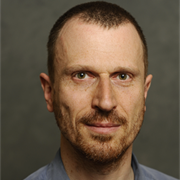
Person Placeholder

Eleonora Maria Tronci

Adjunct Assistant Professor
Civil and Environmental Engineering
Person Placeholder

Haroula Tzamaras

Part-time Lecturer
Mechanical Engineering
faculty photo

Emmanuel (Manolis) Tzanakakis

Professor and Chair of Chemical and Biological Engineering
Chemical and Biological Engineering
stem cell and tissue engineering, optogenetics, diabetes
faculty photo

Farshid Vahedifard

Professor and Louis Berger Chair in Civil and Environmental Engineering
Civil and Environmental Engineering
- Resilient and equitable infrastructure - Impacts of extreme events (e.g., drought, flood, wildfire) in a changing climate on infrastructure and communities - Climate adaptation of infrastructure - Slopes, dams, and levees - Unsaturated soil mechanics - Multi-physics (e.g., hydro-mechanical, thermo-hydro-mechanical) processes in soils - Analytical and numerical methods in geotechnical engineering
Person Placeholder

Thomas Van de Velde

Part-time Lecturer
Gordon Institute
faculty photo

James Van Deventer

Associate Professor
Chemical and Biological Engineering
Synthetic Biology, Chemical Biology, Protein Engineering, Antibody Engineering, Drug Discovery, Genetic Code Expansion, Noncanonical Amino Acids, Tumor Microenvironment.
faculty photo

Thomas Vandervelde

Professor and Chair of Electrical and Computer Engineering
Electrical and Computer Engineering
Interaction of light with matter, physics of nanostructures and interfaces, metamaterials, material science, plasmonics, and surfactants, semiconductor photonics and electronics, epitaxial crystal growth, materials and devices for energy and infrared applications.
faculty photo

Robert Viesca

Associate Professor
Civil and Environmental Engineering
applied mathematics and mechanics for geophysical and engineering problems